3D Printing · Market Trends · NZ Manufacturing
Emerging Growth Trends Driving Expansion in
the 3D Printer Market
3D printing has stopped being an interesting experiment and started being a serious part of how things get made. Here’s a straight read on the specific shifts reshaping prototyping, production, and supply chains — and what they mean for NZ businesses right now.
The Shift from Prototyping to End-Use Production
For most of its commercial life, 3D printing played a supporting role — print a concept model, check the fit, then hand the design off to traditional manufacturing to do the real work. That’s changing, and changing quickly.
Components are now going directly into products, machinery, and customer hands. Three things are driving this shift:
Engineering-grade filaments — PETG-CF, PA12, PEEK, and high-temp resins — now offer mechanical properties that rival injection-moulded parts for many applications.
Modern FDM and resin printers are hitting tolerances that would have seemed unrealistic on consumer machines just three years ago.
For runs of 1–500 units, 3D printing often beats injection moulding on total cost once tooling, lead time, and design iteration are factored in.
For NZ businesses in agriculture, marine, industrial equipment, and healthcare, this matters enormously. When a critical replacement part has a 12-week import lead time, printing a functional substitute locally isn’t a novelty — it’s a genuine competitive edge.
Print Farm Scaling and On-Demand Manufacturing
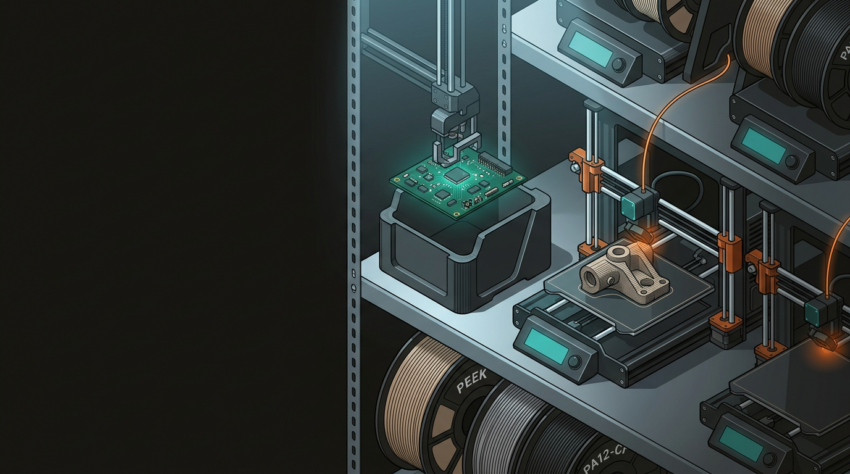
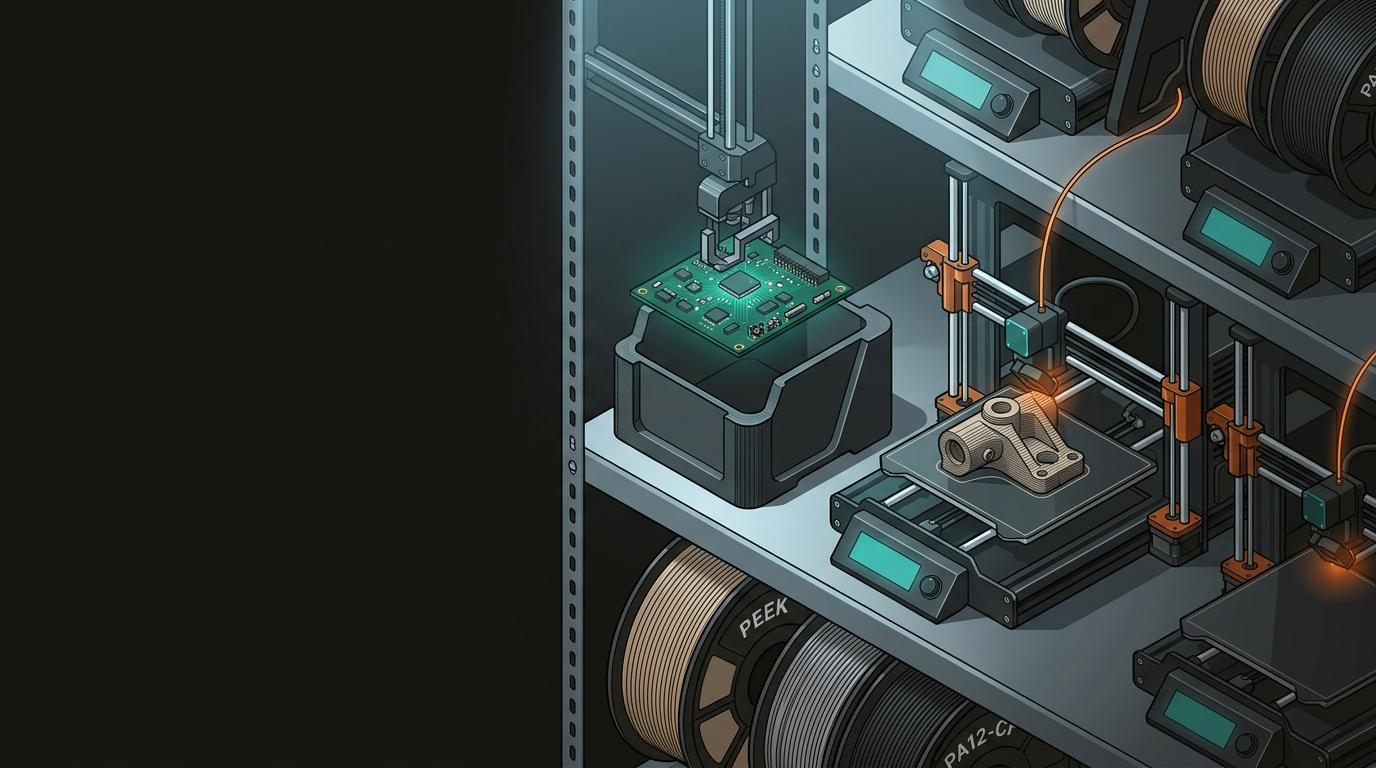
One printer is a tool. Twenty printers running in parallel is a factory. Print farms — large arrays of coordinated machines running around the clock — are one of the most significant structural shifts driving market growth right now.
Traditional Manufacturing
- High upfront tooling cost before a single part is made
- Months of lead time before first production unit
- Design changes require new tooling — expensive and slow
- Large minimum order quantities to justify tooling cost
Print Farm Model
- No tooling — go from file to part in hours or days
- Low-to-medium volume production with full design flexibility
- Overnight design changes without scrapping anything
- Spare parts on demand rather than holding large inventories
This is exactly the direction Plastixel — GeoSaffer’s dedicated 3D printing brand — is scaling towards. Rather than treating 3D printing as a side service, Plastixel is purpose-built for production volume, offering NZ businesses the kind of local print farm capacity that previously only existed overseas.
Materials Innovation Is Unlocking New Industries
Ask anyone what holds 3D printing back in serious industrial applications and you’ll hear the same answer: materials. That bottleneck is eroding fast. The current landscape looks dramatically different from even 2022.
For NZ businesses operating in niche or specialised industries, the right material can be the difference between 3D printing being useful and being genuinely transformative.
Embedded Electronics and Smart Manufacturing Integration
3D printing in 2025 doesn’t exist in isolation. It’s increasingly being paired with electronics, sensors, and automation to produce smart manufactured components — not just plastic shapes. The most interesting growth is happening at the intersections below.
Printed Enclosures with Embedded Electronics
- Custom PCB housings printed to exact specifications
- Sensor mounts and control panels in a single part
- Eliminates off-the-shelf enclosure compromises
Automated Post-Processing
- Print farms paired with automated part removal
- Automated finishing and quality inspection
- Reduces labour cost per unit at volume
Digital Twin Integration
- CAD models and real-world print data linked together
- Continuous quality control across production runs
- Iterative improvement without stopping production
Cross-Discipline Fabrication
- Laser cutting, CNC routing, and 3D printing under one roof
- PCB-level electronics repair and embedded systems consulting
- Complete custom hardware development from a single supplier
GeoSaffer works across laser cutting, CNC routing, electronics repair, PCB-level work, and software and embedded systems consulting — which means projects that go well beyond a simple print job can be handled as genuinely integrated custom hardware development, without the coordination overhead of multiple suppliers.
Local Manufacturing and Supply Chain Resilience
The trend accelerating 3D printing adoption fastest right now isn’t actually a technology story — it’s a logistics and resilience story. The past few years made it very clear how fragile global supply chains are. Long lead times, shipping delays, customs complications, freight costs: these pushed businesses across New Zealand to seriously reconsider where their parts come from.
No Minimum Order Quantities
Print one part or a thousand. No inventory risk, no overordering to hit MOQ thresholds — just the quantity you actually need, when you need it.
No Tooling Lead Time
Go from file to part in hours or days, not months. Critical for obsolete equipment replacement parts and urgent production stoppage scenarios.
Local Production — No Freight, No Customs
No customs hold-ups, no freight delays, no currency risk on every order. NZ-based print capacity means delivery in days rather than weeks or months.
Rapid Design Iteration
Change the design overnight without scrapping expensive tooling. For product development cycles, this compresses the gap between idea and validated physical part to almost nothing.
The catch is that doing it well requires knowing what you’re doing — choosing the right process, the right material, and designing parts that are actually optimised for additive manufacturing rather than just converted from drawings made for a completely different process.
GeoSaffer and Plastixel are based in Auckland and work with clients across New Zealand — from single prototypes to production runs, with file review, material selection, and cross-discipline fabrication built into every job. If you’re exploring what 3D printing could do for your business, get in touch for practical advice with no obligation.
Talk to Plastixel →