3D Printing vs Traditional Manufacturing When to use each for custom parts
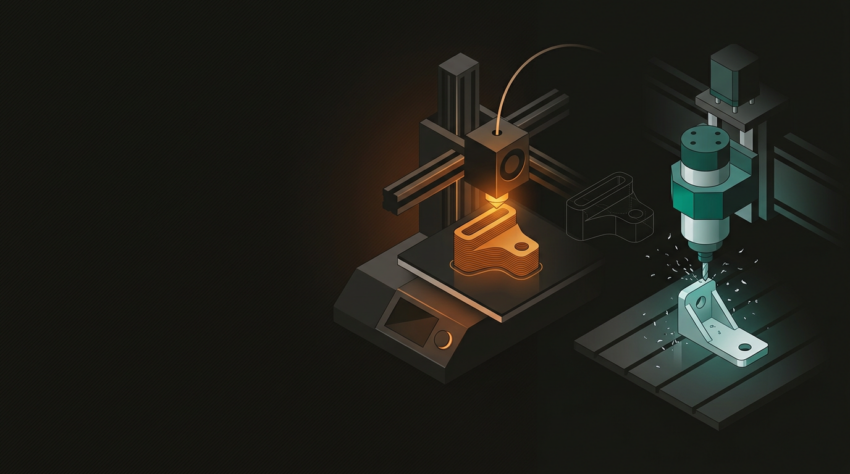
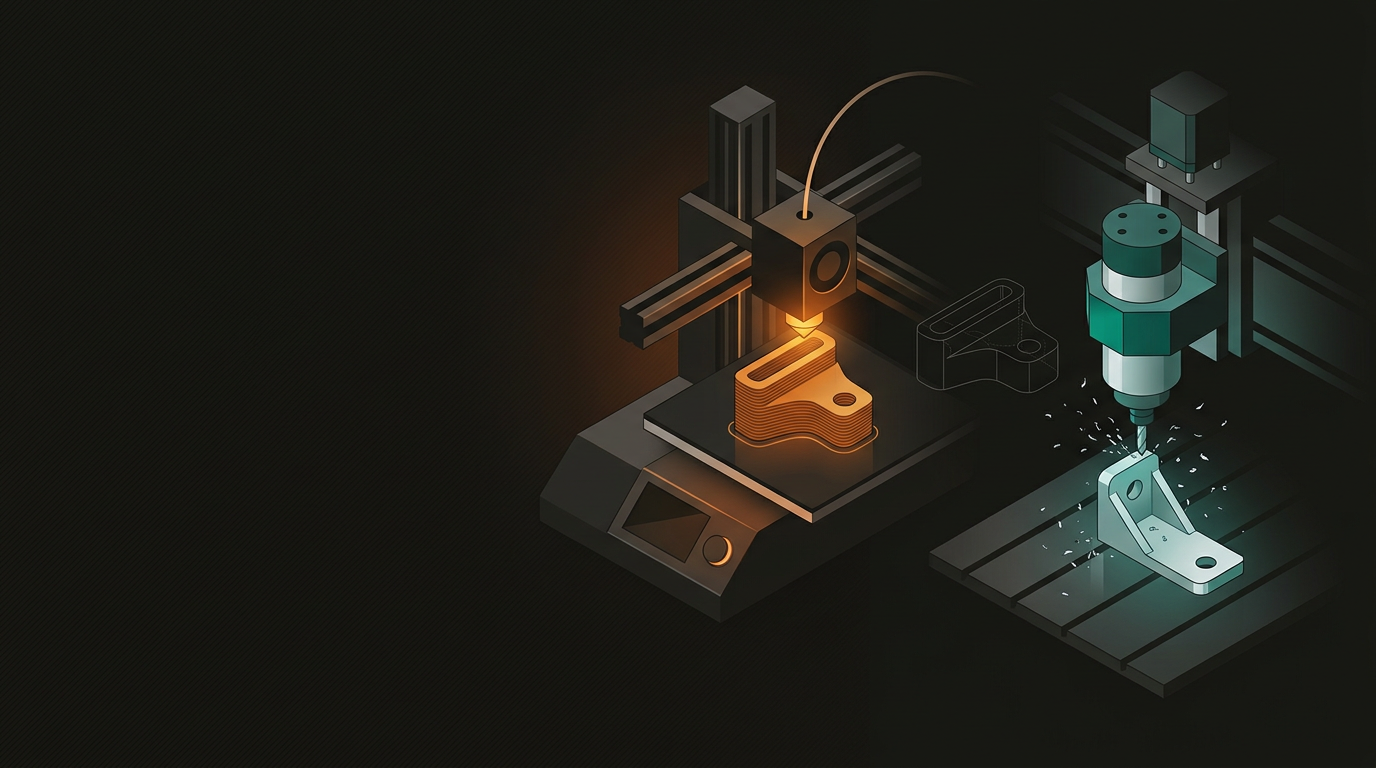
The question isn’t whether a custom part can be made — it’s which process gets you the result you need without blowing the budget or the timeline. There is no universal winner. Additive and subtractive each have real strengths, and knowing when to reach for which is where most of the cost and time savings actually live.
Before comparing, be clear on what’s actually on the table. Every custom part in NZ typically comes from one of these four processes — or a combination of them. Additive builds up from a file. Subtractive cuts away. That single difference drives everything else.
Melts and layers thermoplastic filament. Fast, affordable, and great for functional prototypes and end-use parts in PLA, PETG, ASA, and Nylon.
UV-cured liquid resin, layer by layer. Exceptional detail and surface finish. Parts are more brittle and require post-processing.
Rotating bits cut material away. Works on wood, plastics, and aluminium. Excellent for flat or 2.5D profiles, panels, and structural parts.
Higher-precision subtractive work in metals and engineering plastics. Tighter tolerances, harder materials, higher cost per part.
Additive earns its keep in three specific situations — low volume, complex geometry, and anywhere iteration matters. If any of these apply, 3D printing is almost always the faster, cheaper call.
Low Volume & Fast Turnaround
- No tooling cost — send a file and it prints
- No fixturing or toolpaths to verify
- Functional parts in hand within hours, not days
- Ideal for one-offs and small development batches
Complex or Internal Geometry
- Undercuts, internal channels, lattice structures
- Multi-axis CNC stacks cost fast for these shapes
- Resin handles sub-millimetre features cost-effectively
- Dental, jewellery, micro-mechanical components
Prototyping & Iteration
- CAD to physical object with zero manufacturing setup
- Validate fitment, cable routing, button placement
- Bin three versions in a week without guilt
- Where additive manufacturing genuinely started
Presentation Quality
- Resin delivers smooth, near-injection-moulded surfaces
- Colour-matched filaments for branded prototypes
- Painting, vapour-smoothing, and inserts extend finish
- Clients can hold a representative part in week one
Subtractive manufacturing wins wherever material properties, tight tolerances, or production economics actually matter. These are the situations where picking a printer by reflex will cost you later.
Material Properties Matter
- FDM parts are anisotropic — weaker along layer lines
- Aluminium, brass, Delrin, polycarbonate at full strength
- Reliable under sustained load, vibration, or heat
- No layer-adhesion failure modes to engineer around
Tight Tolerances Required
- FDM typically holds ±0.2–0.5 mm
- CNC routing and machining hold ±0.1 mm or better
- Essential for press-fits and precision interfaces
- Consistent dimension across a full batch
Production Volumes
- Between 50 and 500 parts, economics flip
- Simple geometry favours CNC’s per-unit cost
- A dialled-in program beats a print farm on consistency
- Injection moulding takes over above ~1,000 units
Machined Surface Finish
- Clean finish with no visible layer lines
- Threads cut directly into the material
- Anodising, powder-coating, plating respond predictably
- Better fit for visible industrial components
Use this as a starting framework, not a rigid rule. The right question is always: what does this part actually have to do, and under what conditions?
Choose 3D Printing
- 1–50 parts, minimal setup
- Need it fast — hours or days
- Complex or internal features
- Plastics (PLA, PETG, Nylon, resin)
- ±0.3 mm acceptable
- Light to moderate load, ambient temp
- Functional or smooth resin finish
Choose CNC / Traditional
- 50+ parts with simple geometry
- Setup time is acceptable
- Simple profiles, 2.5D shapes
- Metals and engineering plastics
- Tighter than ±0.2 mm required
- High load, vibration, or heat
- Machined finish, no layer lines
For serious product development, the smart answer is almost never one process. It’s using both at different stages. This is how NZ startups move from concept to shippable product without paying machined-prototype prices every revision.
Validate form, fit, and fundamental function. Cheap, fast, zero grief if three versions go in the bin. Most learning happens here.
Once the form is settled, switch to resin for a smooth, near-production-quality object. Investor meetings, customer trials, final design sign-off.
Commit to the correct engineering material only when the design is locked. Full strength, full tolerance, final finish — without having paid for them across every revision.
A worked example: a custom mounting plate, 200 mm × 150 mm, a few cutouts and M5 threaded holes. The right answer depends entirely on what the plate actually does.
~$15–30. Fast turnaround, fine for light duty. Threads need brass inserts. Great for PCB mounts in low-vibration enclosures.
~$60–120. Full material strength, clean finish, accurate threads. Unit cost drops with batch quantity. The choice for real structural loads.
~$20–40. Worth considering if the geometry is genuinely 2D. Clean edges, fast turnaround, no tooling overhead per part.
Mounting a small PCB in a quiet enclosure? Print it. Structural panel taking real loads? Machine it. Start with the job, not the process.
Neither 3D printing nor CNC is universally better — they’re tools, and their value depends entirely on the job. If you’re working on a custom part and aren’t sure which direction makes sense, describe what you’re making, what it has to do, and the volume and timeline. You’ll get a straight answer, not a sales pitch.
Talk to GeoSaffer about your project →