The Business Case for Custom Fabrication When to outsource vs build in-house
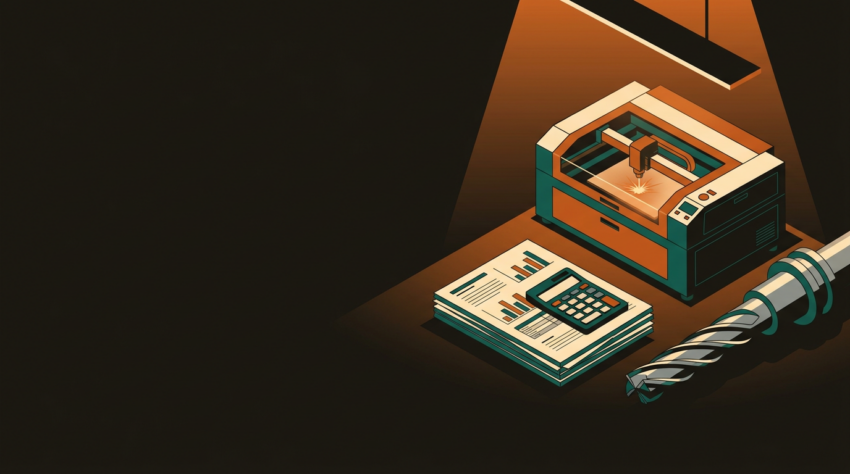
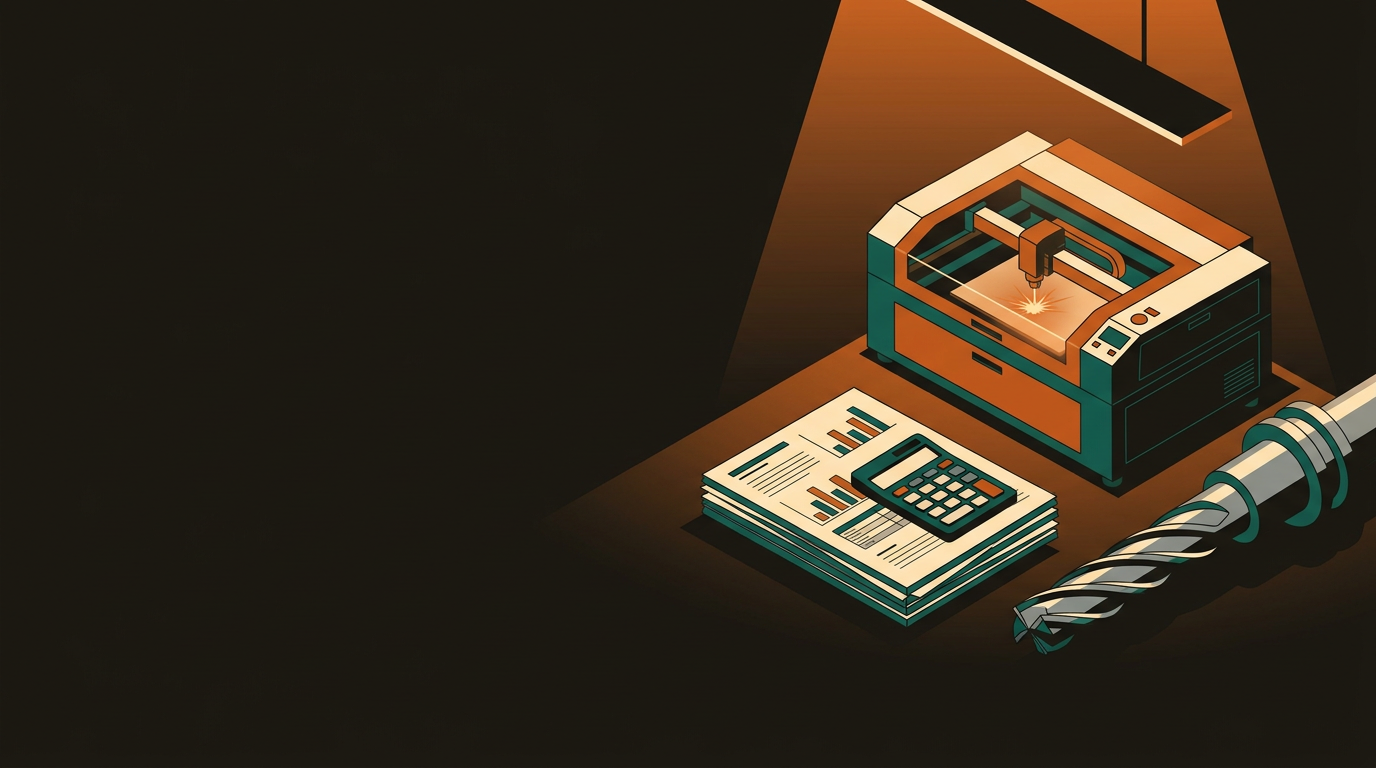
A $15,000 laser cutter feels like the obvious move — until you run the actual numbers. Sticker price is the easy part. What catches people out is everything underneath it: maintenance, downtime, operator time, and the opportunity cost of capital tied up in a depreciating asset. Here’s how to work out which side of the equation you’re actually on.
Most purchase decisions focus on the machine price. Total cost of ownership tells a different story — and the gap between the two is where most buyers get caught out.
Machine price plus ventilation, extraction, dedicated circuits, and software licences. Budget an extra 15–25% on top of the machine sticker.
5–10% of purchase price annually, and that assumes nothing goes seriously wrong. CO₂ laser tubes run $300–$800 to replace and last 1,000–2,000 hours.
Running equipment at a professional standard takes time to develop. If the knowledge doesn’t exist in your team already, training or hiring has a real dollar cost.
Downtime is a double cost. A broken machine produces nothing while your capital stays locked up. For small businesses without a dedicated technician, getting a CNC or laser serviced in Auckland can mean days waiting on someone to show up, then more days waiting on parts from overseas. That’s not a hypothetical — it’s what happens.
Owning fabrication equipment is the right call in specific circumstances. The common thread: high, consistent, predictable use over a long time horizon.
Strong Case for In-House
- 20+ machine hours per week, reliably
- Proprietary process you won’t hand to a third party
- Daily rapid iteration where turnaround time kills momentum
- 5–10 year stable, predictable use horizon
Weak Case for In-House
- Volumes are variable or seasonal
- Team lacks existing machine skills
- Capital has better uses right now
- Machine would run at under 30% utilisation
A product company running daily small-batch production of a proprietary part fits the in-house profile well. A startup prototyping occasionally doesn’t — regardless of how compelling the machine looks on paper.
Three steps, run honestly before you commit. The numbers that matter most are utilisation and true annual cost — not the machine price alone.
Tally what you’ve actually spent on fabrication services over the past year, or project forward honestly. Include delivery costs and any rework.
Divide machine price by usable life (5–7 years for mid-range equipment). Add maintenance, consumables, software, power, and operator time at your actual labour rate.
A machine running at 30% utilisation still costs 100% of ownership. Example: $15k machine over 5 years = $3k/year + $1,500 maintenance + $11,700 operator time = $16,200/year. If you’re currently spending $8k/year outsourcing, in-house costs you twice as much.
For most small manufacturers, startups, and product developers, outsourcing makes stronger financial sense until volume justifies the switch. The advantages tend to be underrated.
In-House Equipment
- Capital locked in depreciating asset
- One capability — whatever the machine does
- Downtime is entirely your problem
- Learning curve on your time and material
- Volume swings mean idle machines
Outsourced Fabrication
- Capital free for inventory, product, marketing
- Industrial-grade machines, tighter tolerances
- Process expertise already developed
- Switch between laser, CNC, printing as needed
- Scale up or down without utilisation anxiety
This model suits early-stage product companies, prototyping teams, and businesses with variable or seasonal fabrication needs particularly well. Businesses that were close to pulling the trigger on equipment often find that professional outsourced fabrication meets their needs — and the capital goes back into their actual product instead.
There’s a sensible middle path: outsource during development, build capacity once the design is locked. This gives you real data to make the in-house decision — not projections made before a single production run.
Outsource prototyping and early production. Iterate fast without tying up capital. Test what volumes actually look like in practice.
Once design is locked and volumes are predictable, run the breakeven numbers with real data. Now you know your actual utilisation, material needs, and quality tolerances.
If the numbers support in-house, buy with confidence. If they don’t, keep outsourcing and put that capital somewhere it compounds better.
Work through these before committing either way. The last one tends to go unasked — and it’s often the most revealing.
Volume & Capability
- What’s my realistic weekly machine utilisation?
- Do I have the skills in-house already?
- How much does my fabrication demand vary month to month?
Capital & Strategy
- Is speed-to-iteration a genuine competitive advantage for me?
- What would I do with the capital if the machine didn’t exist?
- Am I buying because the numbers support it, or because it feels right?
GeoSaffer in Auckland works with everyone from one-off prototype builders to small-batch manufacturers. If you’re mid-evaluation and want a grounded view of what professional outsourced fabrication would actually cost for your parts and volumes, we’ll give you a straight answer about what makes sense for your situation.
Talk to the GeoSaffer team →