Product Design · Prototyping · NZ Startups
Custom Manufacturing for Product Design:
How Prototyping Services Accelerate Time-to-Market for NZ Startups
The gap between a validated product concept and something you can put in front of investors or retailers has killed more NZ hardware startups than bad ideas ever have. Access to professional local prototyping has fundamentally changed how fast that gap can close.
Why Hardware Is Different — and Harder
Software startups can push an MVP in weeks. Hardware startups don’t have that luxury. A physical product needs to exist before anyone can meaningfully test it — and getting to that first physical version has traditionally meant long lead times, expensive overseas tooling, and minimum order quantities that made early iteration financially brutal.
The Old Path
- Finalise design — months of back-and-forth
- Source overseas manufacturer — weeks of emails
- Wait for samples — 4–8 weeks shipping
- Receive wrong or unusable parts
- Repeat — total cycle: 6–12 months
The New Path
- 3D printing, CNC, laser cutting, and electronics under one roof
- Turnaround measured in days, not months
- Real-time feedback from fabricators who understand constraints
- DFM advice built in from the start
- Investor-ready prototype in 6–10 weeks
That 6–12 month old-path cycle is enough time for a competitor to launch, for investor interest to go cold, or for your burn rate to become a very uncomfortable conversation.
The Prototyping Stack: What You Actually Need
Not all prototypes are equal, and not all prototyping services suit every stage of development. A well-structured hardware development cycle moves through three distinct phases — each with different priorities, processes, and materials.
Concept validation. FDM 3D printing for enclosures, ergonomics, and mechanical fits. A $30–80 PLA prototype tells you things a CAD render can’t.
Functional prototyping. Your prototype needs to actually do something — tighter tolerances, real materials, and integrated electronics.
Pre-production and investor samples. Looks and feels close to a production unit. This is what you show at trade shows or put in front of a retailer.
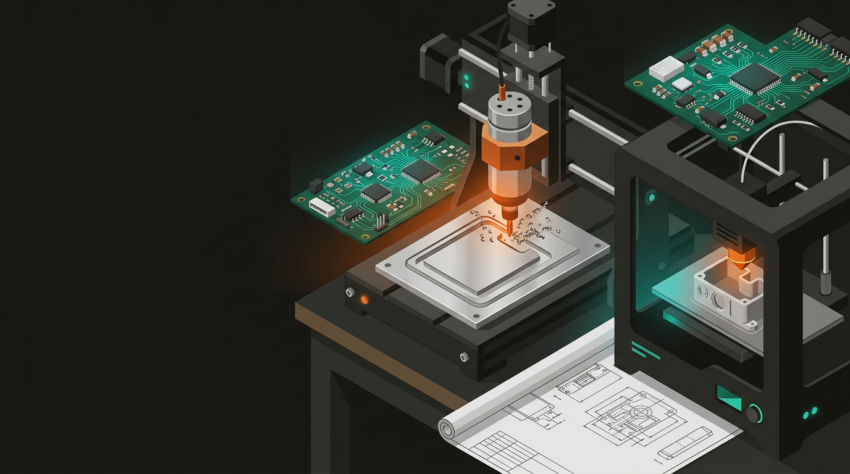
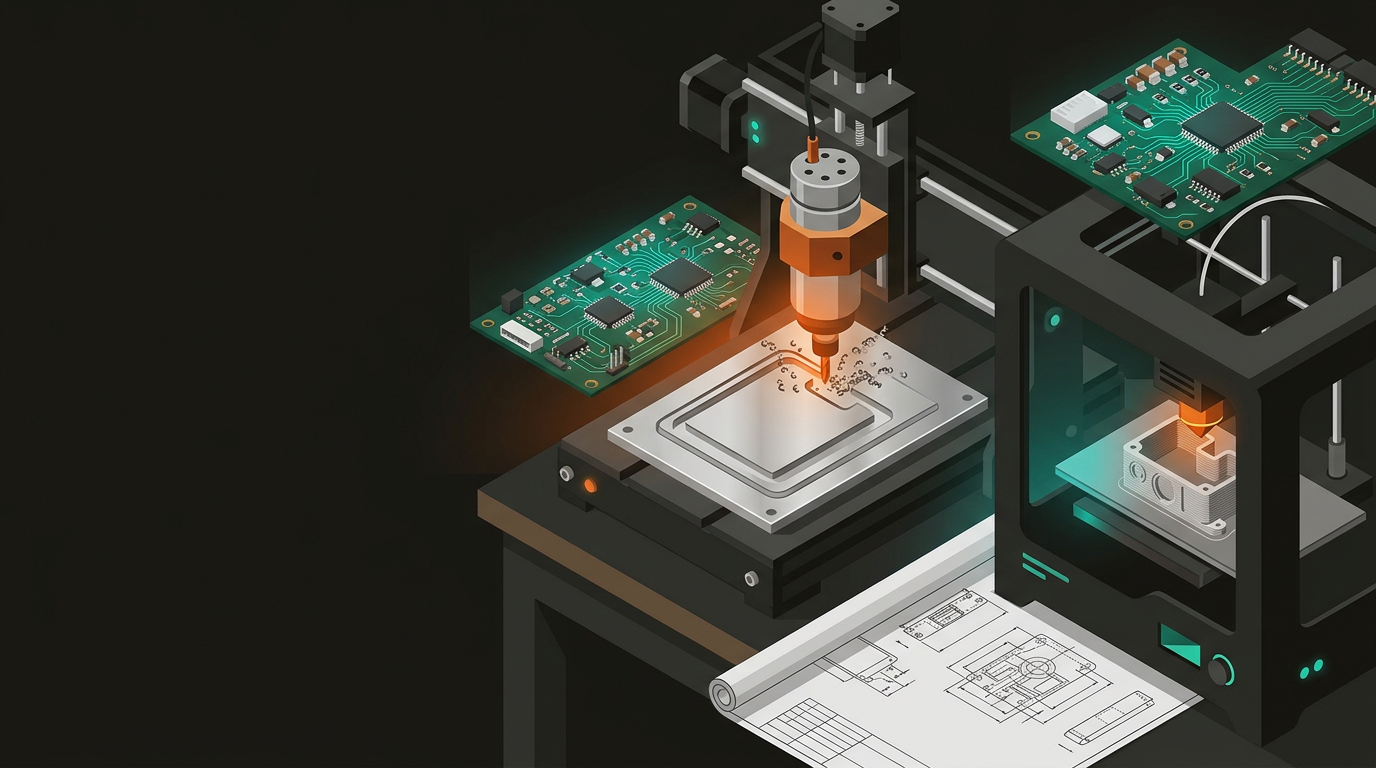
Stage 2 is where most projects get complex. It typically requires several processes running in parallel — which is where working with a team that handles all of this in-house makes a real difference.
Stage 2: Typical Processes
- Resin 3D printing for fine detail and smooth surface finish
- CNC routing for structural aluminium or engineering plastics
- PCB design and assembly for embedded electronics
- Laser-cut panels for production-representative aesthetics
Stage 3: What Now Matters
- Surface finish and overall feel — the details investors notice
- Design for manufacture (DFM) review before tooling decisions
- Repeatability across multiple identical samples
- Documentation and traceability for regulated products
The ROI Case for Professional Prototyping
The fabrication cost difference between offshore DIY and a local professional partner might be $500–2,000 per iteration. But compressing your timeline by 5–6 months is worth considerably more than that to a funded startup.
Scenario A — DIY / Offshore
- 3 prototype iterations over 6 months
- Average 6-week turnaround per iteration
- Each iteration reveals problems requiring redesign
- Hidden costs: delayed investment rounds, team time lost to logistics, misaligned parts needing rework
- Timeline to investor-ready prototype: 7–9 months
Scenario B — Local Professional
- Same 3 iterations, each taking 5–10 business days
- Real-time feedback from fabricators who understand design constraints
- DFM advice built in from the first iteration
- No logistics overhead — problems are caught before parts are made
- Timeline to investor-ready prototype: 6–10 weeks
For a funded startup paying salaries and racing a competitor to market, compressing the timeline by 5–6 months is easily worth $20,000–$50,000 in real terms — often considerably more.
What NZ Startups Are Actually Building
New Zealand has a strong hardware startup ecosystem — particularly in agritech, medtech, marine, and outdoor/lifestyle products. The prototyping requirements vary significantly by sector, but the need for fast, reliable iteration is universal.
Choosing the Right Prototyping Partner
Not all prototyping services are equivalent. A service bureau that outputs files is very different from a team that flags problems before they become expensive mistakes. These are the questions that actually matter.
Can they handle multiple processes in-house?
Enclosures, structural components, and electronics need to work together. Every handoff between separate suppliers adds communication overhead, version control headaches, and days to your timeline.
Do they understand design for manufacture?
There’s a real difference between a team that outputs files and one that flags DFM problems before they become expensive tooling mistakes.
What’s their realistic turnaround?
Next-day for simple prints, 3–5 days for CNC parts, and a week or two for assembled electronics are reasonable benchmarks. Ask for real examples, not estimates.
Can they scale with you?
Your prototype partner should stay relevant as you move into small production runs — not just one-off samples. Switching partners mid-development costs time and introduces risk.
This is the model GeoSaffer operates on — an Auckland-based team offering laser cutting, CNC routing, 3D printing (through Plastixel), electronics work, and software/embedded systems consulting across the full development cycle.
The Founder’s Checklist: Before You Start
Before engaging a prototyping partner, get clear on these five questions. The answers directly determine which processes you need, what your timeline looks like, and what the first iteration should actually test.
Design & Materials
- Do you have CAD files, or do you need design support?
- What materials does the final product need to use?
- Are there regulatory or compliance requirements from the start?
Purpose & Timeline
- Is this prototype for form, fit, or function — or all three?
- What’s your hard deadline, and what happens if you miss it?
- How many iterations are you budgeting for?
The hardware startups that succeed in New Zealand aren’t always the ones with the best ideas — they’re the ones that iterate fastest and make smart calls about where to spend development budget. GeoSaffer works with NZ startups and product designers across the full development cycle.
Talk to us about your project →